From Alaska to the Arctic: A Conversation with Michael Schultz of Face the Outdoors Photography
Michael Schultz is a landscape and nature photographer based in Alaska and the founder of Face the Outdoors Photography.
His work and his business centres on immersive photography experiences that connect people more deeply with wild places, from the Arctic light of Lofoten to brown bears in Lake Clark National Park and the northern lights of Alaska.
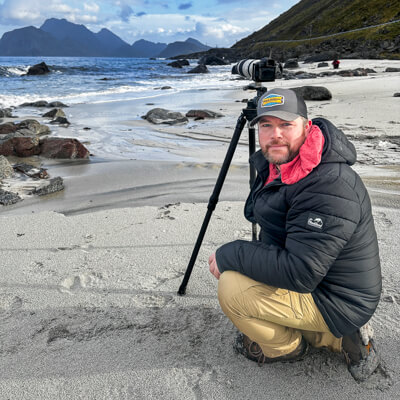
In this interview, self-taught Michael reflects on building a photography business through workshops and photo tours, the vulnerability of putting your work (and teaching) out into the world, and why real learning happens outdoors, in real conditions.
His answers are honest, generous, and full of insight for photographers interested in education-led income, nature photography, and building a sustainable business around their passion.
This interview is the latest in a new series in which I’m shining a spotlight on some of my talented photographer clients. The purpose is to give them a platform to share their stories, experiences, and creative insights in their own words. I hope you enjoy reading it.
Zoe
Interview with nature and landscape photographer, Michael Schultz of Face The Outdoors Photography
Michael, can you tell us about your first paid photography shoot/commission?
“Honestly, at that time, I wasn’t sure anyone would buy into what I was offering, let alone pay what I was charging. There’s something vulnerable about putting your work and teaching out there and asking people to invest in learning from you. But I started at the bottom with my pricing and focused on delivering real value.
What made it incredibly rewarding was the gradual process of building my reputation. As word got out and more people experienced what I had to offer, I was able to slowly raise my rates. Each time someone signed up, it was validation—proof that there are people out there who not only admire my work but are genuinely willing to pay to learn from me and experience the outdoors through my lens.
That journey from uncertainty to confidence, from those first nervous workshops to building a sustainable business around sharing my passion—that’s been one of the most fulfilling parts of running Face the Outdoors Photography. It’s not just about the photography anymore; it’s about connecting people with nature and helping them develop their own vision.
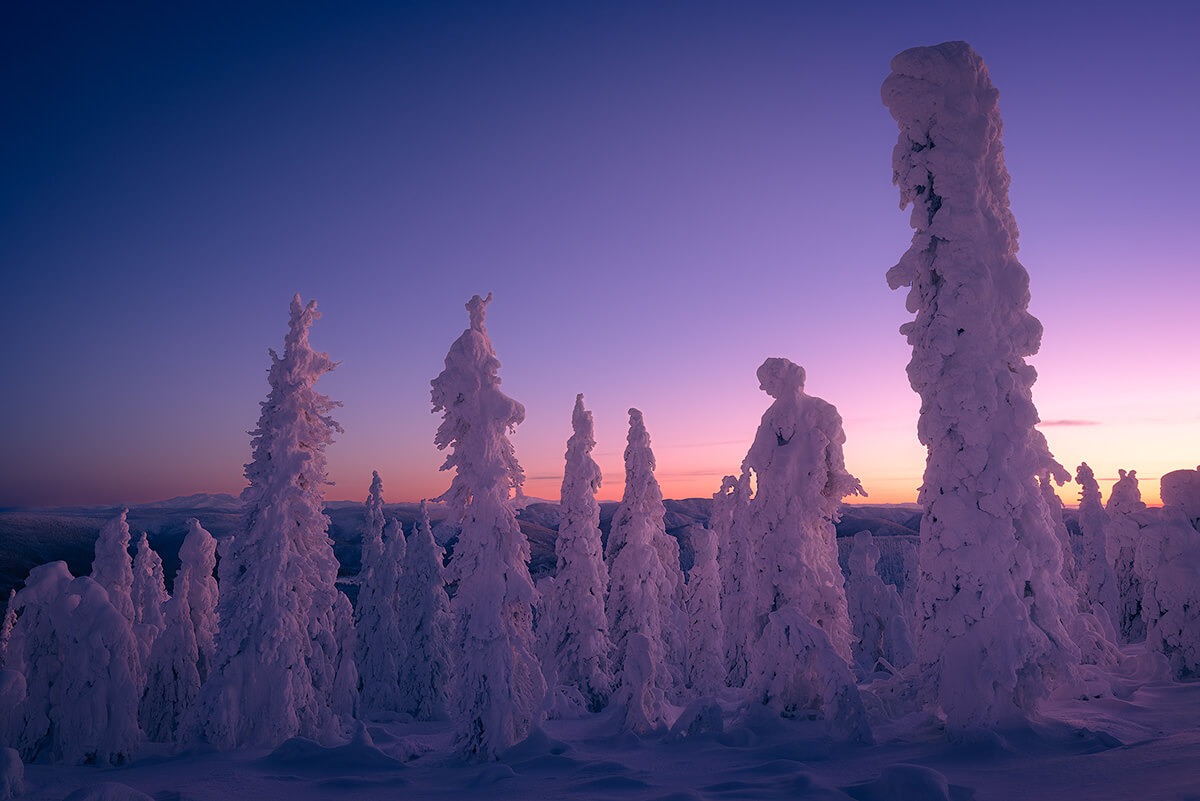
© Michael Schultz / Face The Outdoors Photography
And your most recent shoot/commission?
“My most recent paid work was in October, leading a group of 10 photographers through the Lofoten Islands of Norway for 9 days.
Lofoten is just incredible for photography. We spent our days exploring how that ever-shifting Arctic light drops across the dramatic landscape, and then at night we were out capturing the northern lights dancing across the sky. There’s something magical about that place during autumn.
But honestly, what made it so rewarding wasn’t just the location—it was watching things “click” (no pun intended) for the participants. You’d see someone struggling with their settings or composition, we’d work through it together in the field, and then suddenly they’d get it. That moment when they nail a shot they couldn’t have imagined getting before the trip? That’s why I do this.
I’ve always believed in a hands-on teaching approach rather than standing up and giving lectures. When you’re out there in the elements, dealing with real conditions, real light, real challenges—that’s when the learning really resonates with people. It’s one of the main reasons I started leading workshops and tours in the first place. I wanted to share not just the technical side of landscape and nature photography, but the experience of being in these places and really seeing them through a photographer’s eye.“
What was your first camera?
“Oh boy, like most people I started messing around with those disposable cameras back in the day. You know the ones—you’d shoot your 27 exposures, drop them off at the drugstore, and wait a week to see if you got anything good!
From there I gradually moved up to a small pocket point-and-shoot Canon film camera, which gave me a bit more control. Then came my first digital camera—a Sony Cybershot. That was a game-changer, being able to see your shots immediately and experiment without worrying about the cost of film.
I went through a GoPro phase for a while, playing around with those for different perspectives and situations. But eventually I settled into Canon’s mirrorless system, and I currently shoot with the Canon R5. The technology has come so far from those disposable cameras, but honestly, the fundamentals of seeing light and composition haven’t changed—the gear just makes it easier to capture what you’re envisioning.
It’s been quite the journey from waiting a week to see blurry disposable camera prints to now shooting high-resolution mirrorless in some of the most beautiful landscapes on Earth!”
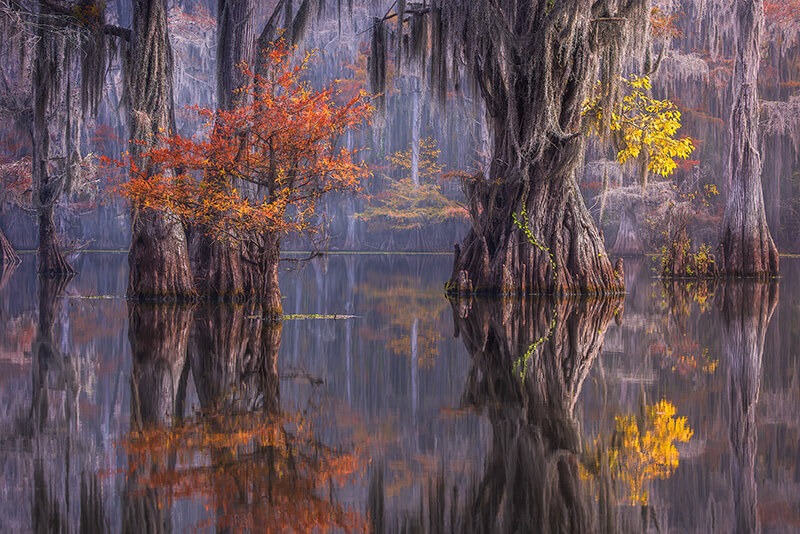
© Michael Schultz / Face The Outdoors Photography
What camera or gear can you not live without now?
“I’d have to say my Canon R5, though I’ll admit I’ve been on the fence about upgrading to the Mark II. But if we’re talking about gear I absolutely can’t live without, it’s my 10-stop ND CPL filter and my 100-500mm telephoto lens.
I’m a huge fan of long exposures, whether it’s during the day or at night. There’s something about showing motion in an image. Smoothing out water, capturing cloud movement, creating that ethereal feel. That resonates with me so much more than trying to freeze everything in place. That 10-stop ND filter lets me do that even in bright daylight, turning rushing waterfalls into silky flows or transforming choppy seas into glassy, dreamlike surfaces.
And the 100-500mm? The sharpness on that lens is incredible, but what I really love is that compression effect you get with telephoto focal lengths. It’s perfect for isolating distant mountain peaks, compressing layers of landscape, or pulling in those far-off details that tell a completely different story than a wide-angle shot. It changes how you see a scene entirely.
Both pieces of gear have become essential to my creative vision. One for showing the passage of time, the other for changing perspective and bringing distant elements together in ways the eye doesn’t naturally see.“
Can you share the story behind securing your first paying client or project?
“My very first paying clients actually came about right before I started doing photo tours, and it was completely unexpected.
I was building my house at the time and had hired a guy to install the HRV system. He kept admiring the work I had hanging on the finished walls, so much so that he brought his wife back the next day when he was wrapping things up. They asked if I sold my prints, and honestly, I told them I hadn’t given it much thought.
They immediately said I totally should, and mentioned there was a new brewery opening up in Fairbanks. They suggested I approach the owners about showcasing and selling my work there. So I packed up some examples and went to talk to them. They agreed to hang my pieces in their space and sell them, which was exciting… until they said they only wanted Alaskan work. That bummed me out because at the time I had shots from all over—Antelope Canyon, Iceland, Georgia—but they wanted to keep it local.
I rounded up some Alaska prints and, not going to lie, the nerves were real. I always had that doubt in the back of my mind—would anyone actually spend money on my metal prints? But then I got my first sale. Then a second. Then a third. And it kept going.
That moment gave me the reassurance I needed to keep pursuing this venture. Sure, friends and family had been supportive, but they can be kinda biased, especially when one of them is your own mother! Having actual strangers choose to spend their money on my work? That was the validation I didn’t know I needed.”
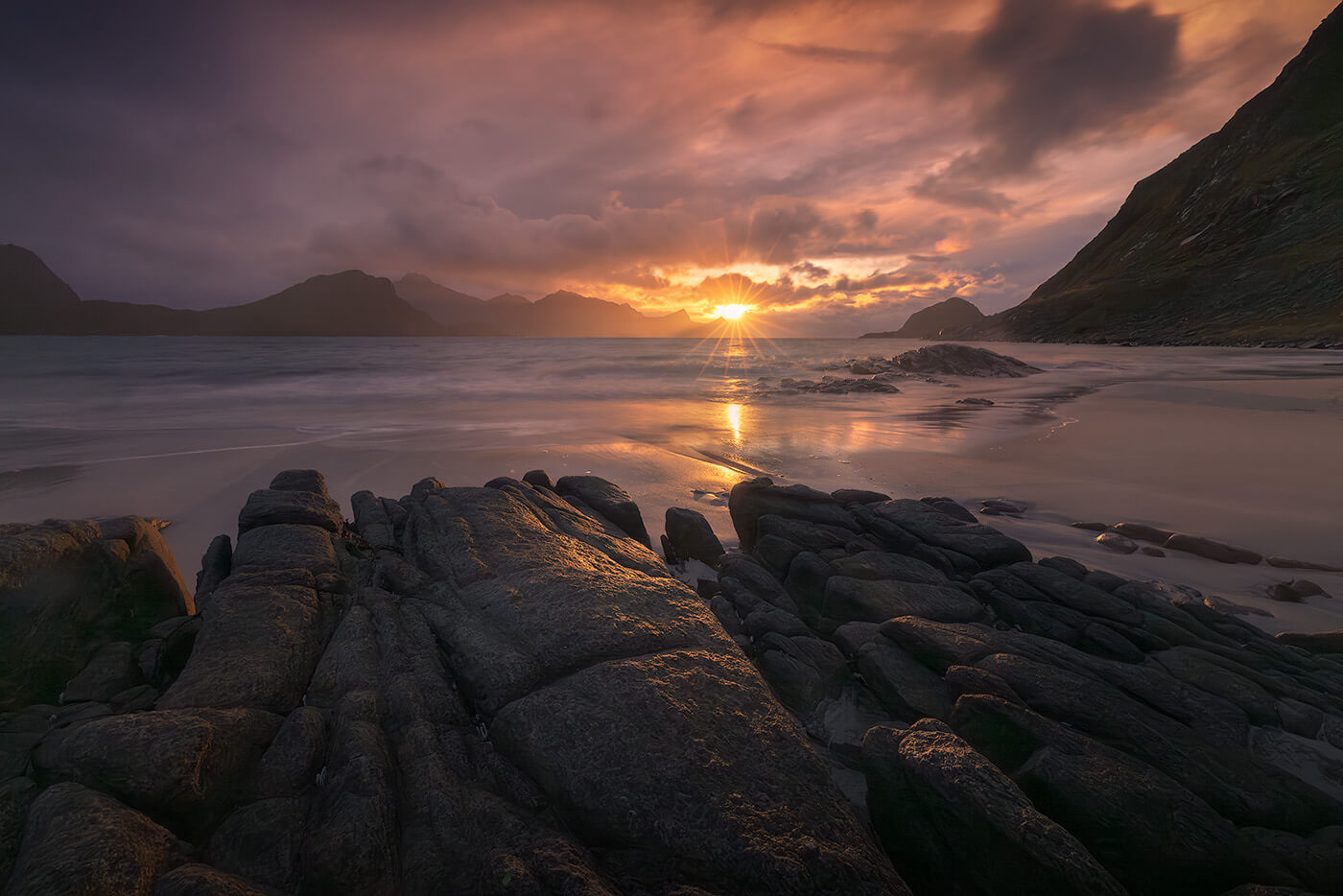
© Michael Schultz / Face The Outdoors Photography
And your most recent client project/commission?
“When I started to see that I just might be able to make a go with this, I decided to go big, you could say. I decided I was going to take Face The Outdoors Photography international.
Talk about a huge leap! Going from leading photo tours here in Alaska to getting people to buy into me and my vision enough to travel across the globe. There were weeks I’d be stressed, wondering why no one was booking, questioning if I was even going to sell a single spot, let alone sell the workshop out.
Half of the guests were returning clients, so that was the hope I was holding onto. If these folks believe in me enough to keep coming back, and now they’re willing to go international with me, then surely the rest will fall into place. But not gonna lie, there were some sleepless nights. I was taking on this vision I had of offering folks a photography experience they would love and gain real value from, and the weight of that responsibility was heavy.
Well, as fate would have it, the Lofoten workshop did sell out. And on top of that, my Madeira workshop sold out 14 months before it’s even scheduled to happen. I’m taking those highs when I can, because I know there’s always gonna be those lows. But moments like that? They remind me why I took the leap in the first place.”
If your work has been exhibited or published, can you tell us about when and how this first happened?
“My first exhibition actually ties back to those first print sales at the local brewery in Fairbanks. After my work started selling there, a couple of other businesses reached out asking if I’d be interested in showcasing my photography in their establishments as well, which was a nice confidence boost.
I’ve also had some of my work published locally in business calendars over the years. And one of the highlights was being mentioned in a National Geographic article regarding my northern lights photo tours—that was pretty surreal and definitely one of those moments where I had to pinch myself.
But honestly? This is one aspect of my business I haven’t spent much time actively pursuing. I’m usually busy and would rather be out in the field making the photos and just being out amongst nature—that’s where my heart is.
That said, I haven’t totally ruled out the idea of getting more into exhibitions or publications down the road. For now, I’ve set things up so folks can buy prints directly off my website, which frees me up to be out there with camera in hand doing what I love most. It’s about finding that balance between the business side and the creative side, and right now, the creative side wins most of the time.
If the right opportunity comes along, I’m open to it. But I’m not going to chase it at the expense of being out there capturing the moments that make this all worthwhile.”
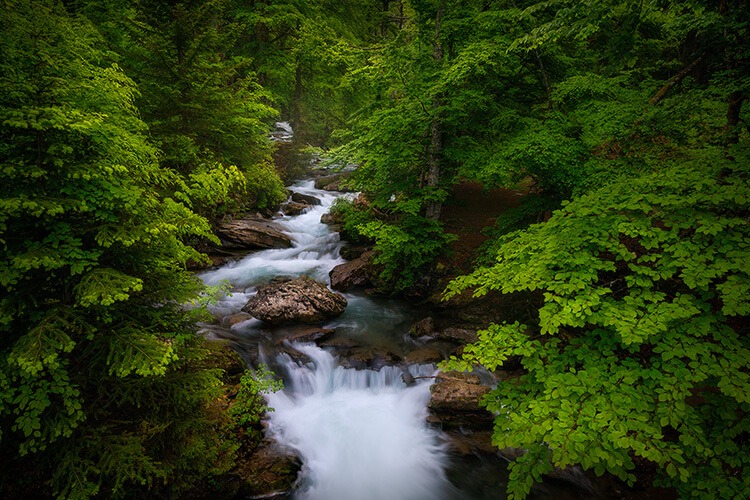
© Michael Schultz / Face The Outdoors Photography
What is your most recent publication/exhibition or feature?
“Most recently, my Northern Lights tours here in Alaska were featured by National Geographic, which was a huge honor and validation of the work I’ve been doing to showcase the Aurora Borealis to photographers and travelers from around the world.
I also recently was interviewed with Australian photographer Grant Swinbourne for his podcast. We’ll be diving deep into landscape photography—my artistic approach, how I attack my shots, my creative vision, and the philosophy behind my work.
What excited me about that podcast interview was the chance to articulate the “why” behind what I do. Usually, I’m out in the field just doing it, but taking the time to break down my process and vision with another landscape photographer who truly gets it made for a compelling discussion.
It’s also an opportunity to connect with photographers from different parts of the world. Grant’s based in Australia, so comparing our perspectives and approaches from completely different landscapes and environments brought some interesting insights. Landscape photography in the Australian outback versus the Alaskan wilderness—there’s bound to be some fascinating contrasts and commonalities!”
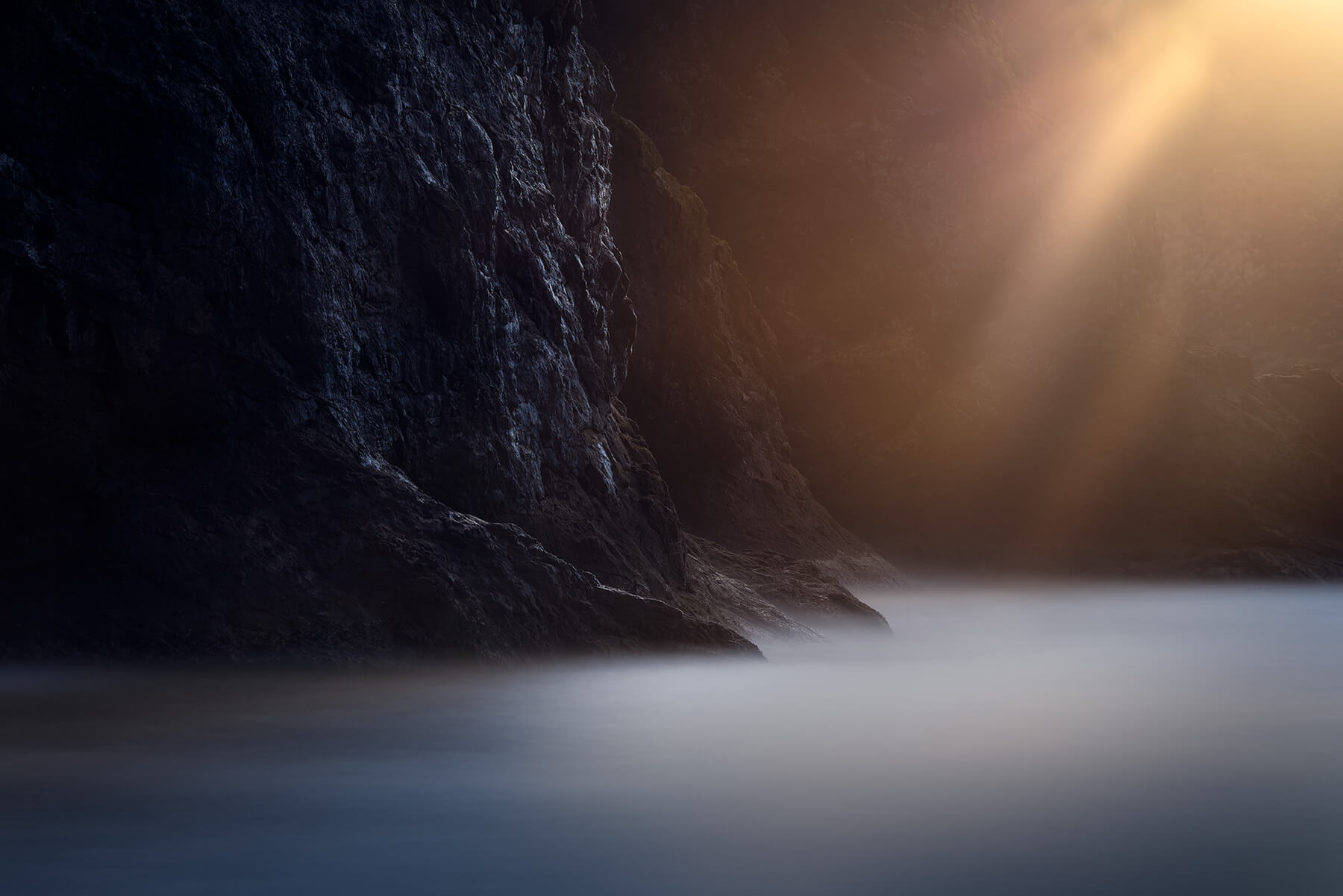
© Michael Schultz / Face The Outdoors Photography
Can you share details of your first big challenge in your photography business?
“I’m sure I’m not alone in this regard, but the technical side of running a business in this digital era has been my biggest challenge.
Learning that there are so many things and steps you have to do just to get your business out there so people can actually find you on the internet—that was a wake-up call. When I started out, I was like, “I’ll build my website, post my stuff, hit publish, and folks will find me.” Boy, was I wrong.
This challenge consumes a lot of my “free time,” especially nowadays with how algorithms seem to change by the second. And then there’s marketing—trying to find a marketing agency that actually knows your line of work and can get you in front of the right people. That’s a challenge in itself. On top of that, the attention span of folks nowadays seems to fall into seconds. You’ve got to capture it immediately or you’ll lose them, and that’s a whole different skill set than making great photographs.
The competition can be high at times, and just trying to stand out and get people to take you seriously—to take your work seriously—I’d have to say that’s been the biggest ongoing struggle.
I got into this because I love being out in nature with a camera in my hand, not to become a marketing expert or spend hours figuring out SEO and social media strategies. But that’s the reality of running a photography business today. You can have incredible work, but if people can’t find you or don’t know you exist, it doesn’t matter. So you learn, you adapt, and you keep pushing forward—even when you’d rather be out shooting.“
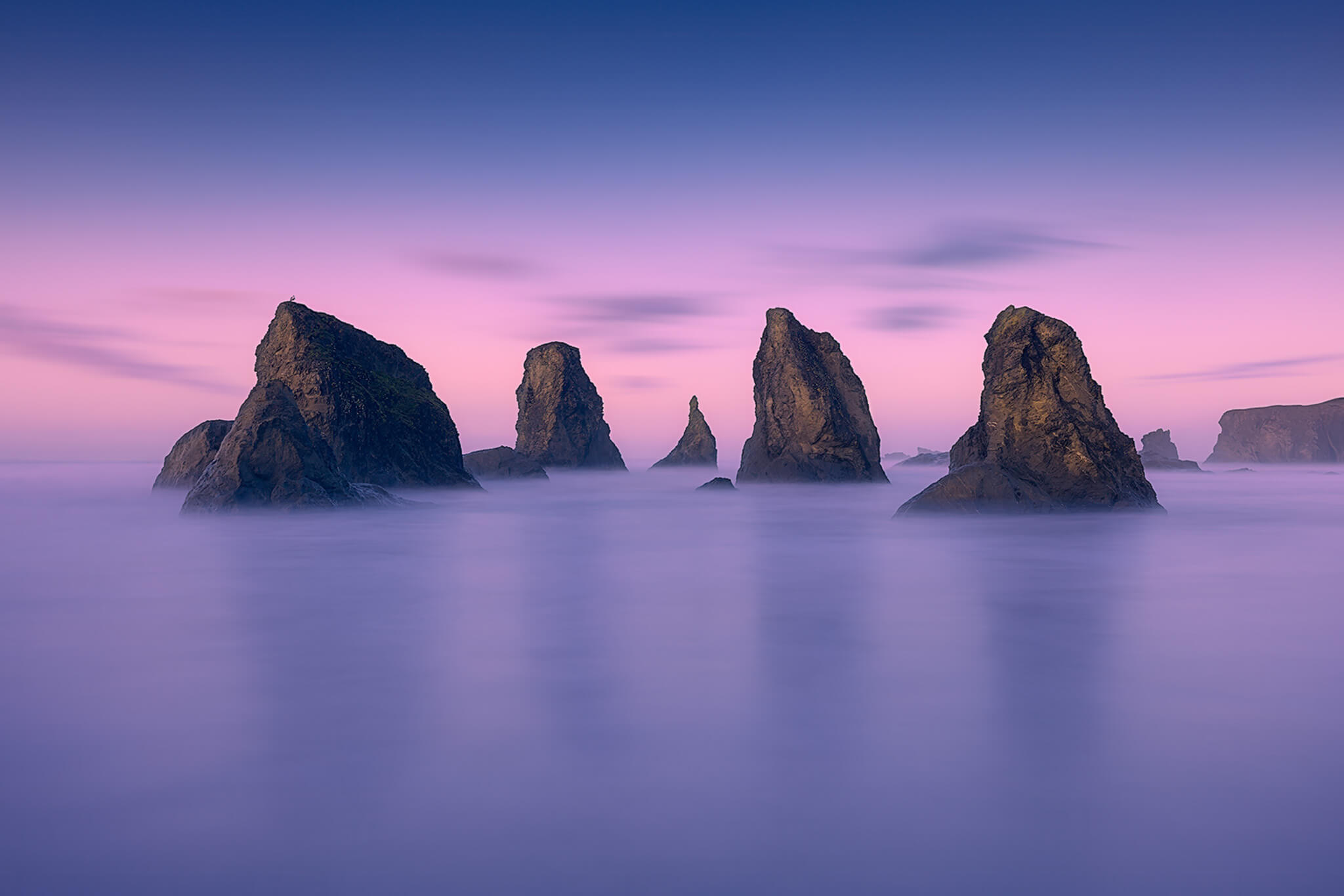
© Michael Schultz / Face The Outdoors Photography
What was the most recent challenge you have been working through?
“I’d have to say—and this is still a work in progress—but getting my work and website in front of more eyes by improving the SEO and my overall web presence.“
Is there a photo you’re particularly proud of (and why):
“This is a tough one as I’ve got a few, but I would say it would have to be a toss-up between two images I took of coastal brown bears in Lake Clark National Park on one of my photo tours.
The first one, I really punched in with my 600mm and captured this bear looking right into the camera, giving me a side eye. I don’t always follow “rules” in my compositions—rules are made to be broken—but when you look at this image, it’s as if the brown bear is looking not just at the camera but into your soul. I’ve started to become more of a fan of wildlife shots in black and white to help with that mood and feeling, and this one just has that intensity.
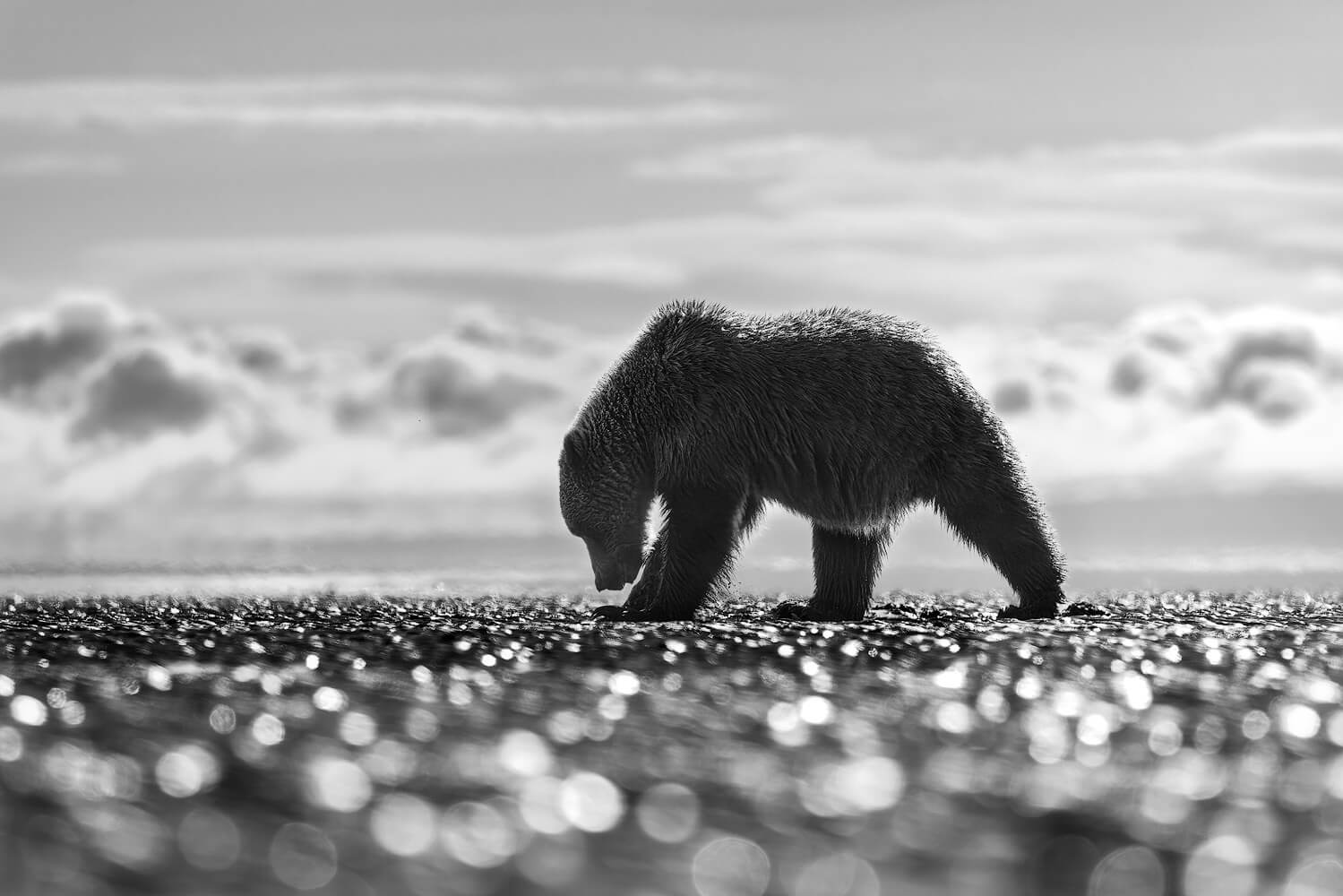
The other one is a brown bear walking on the tidal mudflats at low tide with the sun backlighting its fur. I placed my focus on the bear and shot low to the ground, making the foreground out of focus for that bokeh effect. You’re brought to this sense of serenity—you become a spectator in the bear’s world, watching this magnificent creature in its natural element.
I know you asked for one, but it’s a toss-up. Both of these images represent what I’m always chasing—that connection, that moment where you capture not just the subject, but the feeling of being there.”
© Michael Schultz / Face The Outdoors Photography
Who/What is your favourite subject to photograph or type of shoot?
“Landscapes and nature for sure. I’ve never been a fan of shooting people—I find myself able to connect more with the outdoors and wildlife in a way that just feels natural to me.
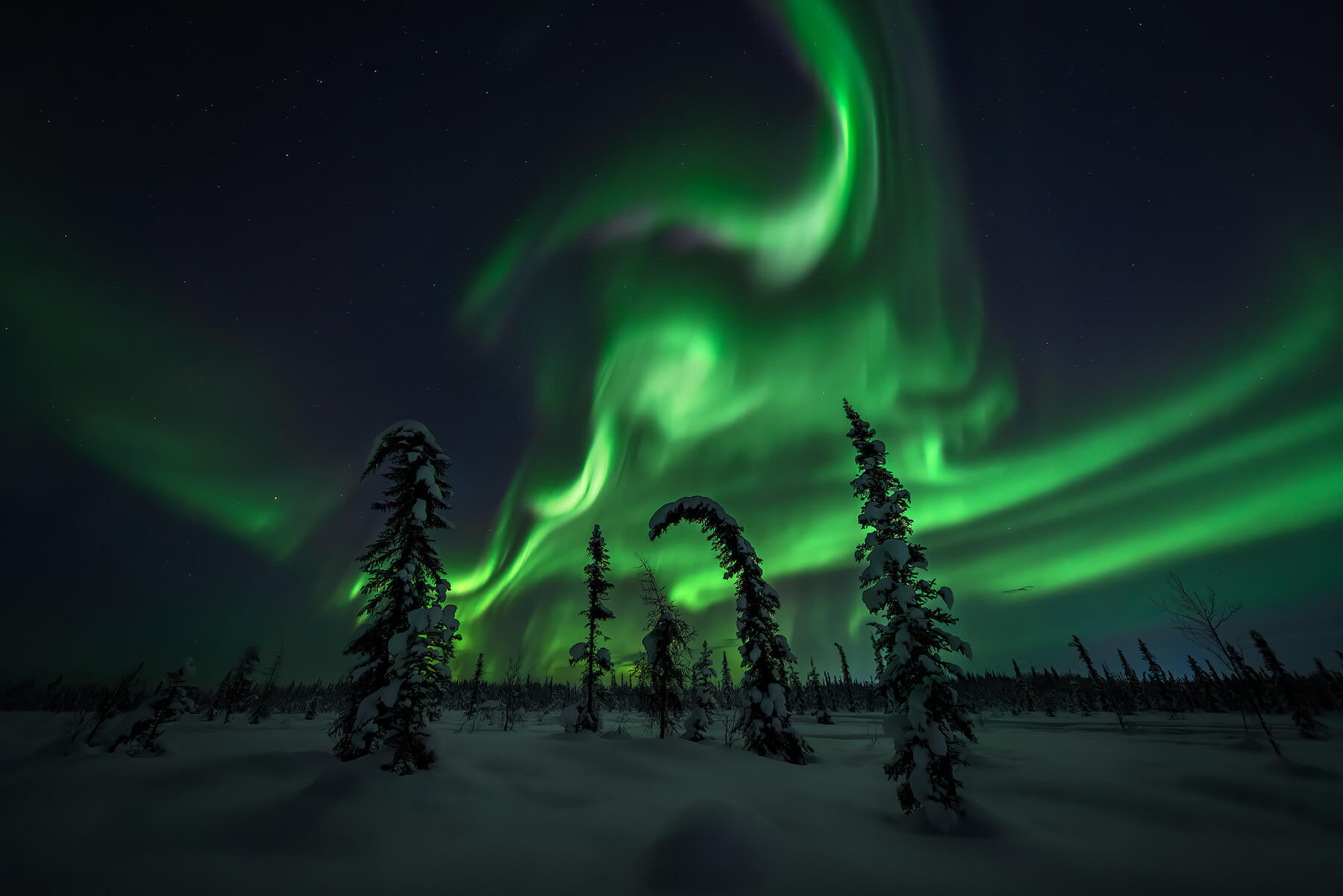
And since I do live in Alaska, it goes without saying: the northern lights. Every night is different, and you’ll never have the same shot of their magical displays. That’s what keeps you wanting more, always chasing that unexpected moment when the sky just explodes with color and movement.
There’s something about being out there in the cold, in the dark, watching the aurora dance across the sky that never gets old. You can go out a hundred times and get a hundred completely different experiences. The lights might be subtle and green one night, then vibrant curtains of red and purple the next. It’s unpredictable, it’s humbling, and it’s absolutely addictive.
That combination of landscape and the aurora—capturing how that light interacts with the mountains, the water, the snow—that’s my sweet spot. It’s where I feel most alive as a photographer, and it’s what I love sharing with people on my photo tours. Watching someone see the northern lights for the first time and capture their own unique moment with it? That never gets old either.”
© Michael Schultz / Face The Outdoors Photography
What lesson has most changed how you work?
“I would have to say: slow down more and look. And by “look,” I mean at times to look just through your viewfinder.
A friend of mine, TJ Thorne, told me that I’m a big vista guy—always looking for that big vista shot—when the most impactful shot could be right down at my feet. And he wasn’t wrong. But I can see how easy it is to get overwhelmed when you’re standing amongst a grand vista that just screams “take my picture!”
I have since adopted this more and more in my teachings on my workshops because I see it all the time. Folks are presented with a grand landscape and don’t know where to point their lens. Their eyes get lost in being overwhelmed, and they want to—they think they have to—capture it all in one shot. I was the same way.
But when you slow down and start to pick apart those bigger scenes, you start to notice those smaller and more powerful compositions. Sometimes they have even more impact as a final image than if you’d taken the same grand vista that 1,000 other people have taken. Taking a well-known location and putting your own creative spin on it that hasn’t been done before will always set you apart from the crowd.
That lesson from TJ completely changed how I approach a scene and how I teach others to see.”
What advice would you give to your younger self when you first started photography?
“To take more photography classes when I was in school versus playing sports.
I’m completely self-taught, and it’s been a lot of YouTube videos and trial and error. Don’t get me wrong—there’s value in figuring things out on your own and making mistakes along the way. That’s how you really learn what works and what doesn’t. But looking back, I would say taking some classes could have helped speed up some of those tougher lessons and understandings.
Getting an earlier grasp on the fundamentals—composition, exposure, how light works—would have saved me a lot of frustration and probably years of spinning my wheels. Instead, I had to piece it all together bit by bit, often learning the hard way why something wasn’t working.
That said, being self-taught has also forced me to develop my own style and approach without being boxed into someone else’s methods. So maybe it all worked out the way it was supposed to. But if I could go back? Yeah, I’d tell myself to take the classes and get that foundation down early. The trial and error can come after you know the rules well enough to break them intentionally.”
© Michael Schultz / Face The Outdoors Photography
Studio or outdoors?
“Outdoors 100%. Gotta be outside.
That’s where I feel most alive and most creative. There’s no studio setup that can replicate the feeling of standing on a mountain ridge at sunrise, or waiting in the cold for the northern lights to appear, or being present when a brown bear walks across a tidal flat in perfect light.
Nature is my studio. The elements, the unpredictability, the raw beauty of it all—that’s what drives me. I didn’t get into photography to be stuck inside under controlled lighting. I got into it to capture the wild, untamed moments that you can only experience by being out there in it.
Plus, I’m not much of a people photographer anyway, so a studio would just feel like a prison to me. Give me wind, rain, snow, mud—whatever nature throws at me. That’s where the magic happens.“
Digital or film?
“Digital for sure. The ease and seeing instantly if it worked or not is a game-changer.
Don’t get me wrong—I have respect for film and the photographers who still shoot it. There’s something romantic about the process. But for what I do, leading workshops and photo tours in remote locations where conditions can change in seconds, digital just makes sense.
Being able to check your exposure, your composition, your focus on the back of the camera and make adjustments on the fly? That’s invaluable, especially when you’re teaching someone who’s trying to nail a shot of the northern lights or capture a fleeting moment with wildlife. You don’t get a second chance with a roll of film when a bear walks into perfect light or the aurora starts dancing.
Plus, the technology in modern digital cameras—the dynamic range, the low-light performance, the ability to shoot fast-moving subjects—it lets me capture images I could never have gotten with film. I started with film back in the day, but digital opened up a whole new world of possibilities, and I’m not looking back.”
Morning shoots or evening shoots?
“Both, honestly. I can’t pick one over the other. Morning light has that crisp, clean quality—especially in Alaska where you get those long, soft sunrises. There’s something peaceful about being out there before the world wakes up, watching the landscape come to life as the light hits it. Plus, wildlife tends to be more active in the mornings, which is a bonus.
But evening shoots? That golden hour light is magic, and then you transition into blue hour and potentially the northern lights if conditions are right. Some of my best aurora shots have come from staying out well past when most people would call it a night.
The truth is, in landscape and nature photography, you’ve got to be flexible. The best light doesn’t care about your sleep schedule. Sometimes the most incredible moments happen at 3 a.m. when the aurora is going wild, or at dawn when fog is rolling through the mountains. You show up for both, or you miss half the story.
So yeah, both. I’ll take whatever light nature wants to give me.”
Editing yourself or delegating?
“Myself for sure! I don’t think anyone else who wasn’t there can recreate the feeling, the mood from when I took the shot.
Editing is such a personal part of the creative process for me. I remember what the light felt like, what the temperature was, what the scene looked like beyond what the camera captured. All of that influences how I bring an image to life in post-processing. Someone else might be technically skilled, but they can’t know what I was feeling or seeing in that moment, and that connection matters.
I’m also not a big fan of that heavy-handed HDR look. I try to keep things as natural as possible and how I saw it with my eyes. We don’t see the world in all of that dreamy, over-processed look. I want my images to feel like you’re standing there with me, seeing what I saw—not some hyper-saturated, overcooked version of reality. But hey, to each their own. That’s just my approach.
That said—and this is the honest truth—this is also why my backlog is growing. I’ve got thousands of images sitting there waiting to be edited because I refuse to hand them off to someone else. It’s both a blessing and a curse. The blessing is that every image that goes out into the world has my full creative vision behind it. The curse is that I’m constantly playing catch-up, and there are incredible shots just sitting on hard drives waiting for me to get to them.
But I’d rather have a backlog than lose that personal connection to my work. It’s worth it to me, even if it means longer nights at the computer when I’d rather be out shooting.”
What’s next for you, Michael?
“I’ve got a packed schedule ahead, and I’m excited about all of it. This coming spring, I’ll be running two workshops chasing the northern lights here in Alaska in February and March. Then in spring, I’ll be leading a group out to Lake Clark National Park, photographing brown bears and spring bear cubs, and we’ll head back again in the fall in September.
In November, I’ll be taking a group to Madeira, Portugal for a week. That workshop is a collaboration with Duarte Sol, a landscape photographer from Madeira, which I’m really looking forward to. It’s always great to team up with someone who knows their home turf inside and out.
I’m also working on bringing a new workshop onboard—photographing humpback whales in Southeast Alaska during their spring migration when their bubble net feeding style is in full swing. That’s going to be something special.
Looking further ahead, I’m heading back to Norway in the spring of 2027 in March to chase the Arctic light and landscapes under the northern lights. Then in October 2027, we’ll be photographing the Dolomites in fall color—that soft, golden, low-angle light and those golden larch trees. And in November 2027, I’ll be leading a couple of workshops down in Caddo Lake, Texas, photographing the cypress trees and wildlife in the swamps of the bayou.
My goals are always to keep coming up with offerings and experiences that people will enjoy and find value in. But my biggest goal? Bringing like-minded individuals together to photograph the amazing world we live in. That’s what it’s all about.”
View The Face The Outdoors Photography Website
Fine Art Landscapes and Nature Photography by Michael Schultz
Note from Zoe: Thank you, Michael, for this fascinating interview and for sharing so generously! Wishing you all the very best in your exciting career and with your future workshops!
Michael’s 5-Star Google Review
“Working with Zoe has been a game-changer!”
“After struggling with the marketing side of things for so long, I finally found Zoe, who actually gets photographers and the world we live in. It’s made a huge difference having someone in my corner who understands that my strength is being out there capturing images, not sitting behind a computer trying to decode algorithms and search rankings.
I’ve seen real growth in a short amount of time, which has been encouraging. It’s proof that when you find the right help—someone who knows your industry and can translate your vision into something that works online—things start to click.
Finding Zoe, who genuinely understands the photography business and can help cut through all the noise, has been a game-changer for Face The Outdoors Photography. It’s allowed me to focus more on what I do best while knowing the business side is in good hands.”
Michael Schultz (December 2025)


Thank you for your comment Lisa. You’re right – he is an incredibly talented photographer! It’s a pleasure to have interviewed him. Do also take a look at some of the others in this series.
Thank you for a very thorough interview with Mike. He is so articulate and knowledgeable in the creative skill of art photography. His pictures are outstanding and unique. He will have a great future in the photo art world!