Why Photographers Must Focus on SEO to Be Seen in AI Search
AI search tools like ChatGPT, Bing AI, and Google’s AI-powered answers are changing the way people discover businesses online. For photographers, this presents both an opportunity and a challenge.
The opportunity is huge: being featured in AI responses can put your work and your brand directly in front of potential clients. The challenge? AI relies on high-quality, optimised web content, NOT social media posts (which many photographers prioritise over web optimisation), to provide accurate answers.
In short: if you want AI to recommend you, your SEO has to be solid.
What is AEO and Why It Matters
AEO, or Answer Engine Optimisation, is the practice of optimising your website and content so AI systems can understand, index, and reference your expertise. Think of it as SEO for AI.
AI doesn’t scroll Instagram or read your Facebook posts. It looks at the web and it prioritises:
- Authoritative, credible websites
- Well-structured content that answers questions
- Relevant keywords that match user queries
- Links from reputable sources that reinforce trustworthiness
For photographers, this means that if you want to be recommended in AI-generated answers like “Who are the best wedding photographers in Dorset?” or “Tips for newborn photography in London,” your website and blog content need to be optimised for both Google and AI.
Why Foundational SEO is the Key
You may think AI search is something brand new that you now need to learn and develop skills in. But the truth is, it builds on traditional SEO foundations.
So, the good news is that if you have your website SEO in good order, you’re far more likely to benefit from AI search engines name-checking you in their responses when people are searching for a photographer in your niche or location.
Wherever you are on your SEO journey, here are some key principles to understand about SEO and AEO:
1. Website Structure Matters
- Clear website navigation (menus) help AI understand your content
- Well-named pages, headings with correctly-assigned heading tags (H1s, H2s etc), and alt text on images give context
2. Content Quality is Critical
- AI rewards content that genuinely answers user questions
- Long-form, informative, and helpful blog posts are more likely to be referenced in AI tools
3. Keywords Still Work
- Use descriptive, relevant terms for your services and location throughout your website content (pages and blog posts)
- Long-tail keywords are gold. E.g., “best family photographers Poole” or “outdoor newborn photography Hampshire”
4. Backlinks & Authority Signals Count
- AI evaluates trustworthiness through links from reputable sites
- Guest blogs, media features, and PR coverage all strengthen your online credibility
As you may now appreciate from having read the list above, AI tools work in a similar way to traditional search engines. They present experts and websites in their search results based on their perceived credibility and relevancy.
So, if your website is already optimised for SEO, well done! When it’s easy for AI tools to understand your business, its location and specialist offer, it’s more likely that your website will appear in AI responses when a user asks for photographer recommendations.
Be warned, though. If you haven’t prioritised SEO and have a poorly optimised photography website, no matter how visually stunning it is, it may get ignored entirely by AI tools and not get suggested in AI Search results.
Read more: Five Ways to Get More Backlinks For SEO
Practical Steps for Photographers to Optimise for AI Search
1. Audit Your Website SEO
- Check you have added meta titles, descriptions, headings, and descriptive image alt text to all of your images
- Ensure that every page and blog post has been optimised for a unique keyword phrase (N.B. If this is a challenge for you, I provide SEO copywriting services and support photographers with SEO keyword strategy and website optimisations)
- Make sure your site is mobile-friendly and fast-loading
2. Create Client-Focused Content
- Write blog posts that answer common questions, solve problems, or give advice
- Include your location and niche naturally in your content
3. Prioritise Guest Blogging & PR Features
- Build backlinks and authority with guest posts and editorial features on trusted websites
- The more your content is referenced externally, the more credible it becomes to AI

4. Keep Content Updated
- AI prefers fresh and accurate information
- Regularly update your blog, portfolio, and service pages
5. Always Keep Your Ideal Client In Mind
- When creating content, ask: “What would my ideal client search for?”
- Provide answers clearly and concisely
Website Optimisation: The Long-Term Advantage
Optimising for AI search isn’t about a quick hack. It’s about future-proofing your photography business.
By strengthening your website SEO today, you’re:
- Increasing your chances of appearing in AI-generated answers
- Attracting more organic traffic from both humans and AI systems
- Building long-term visibility that doesn’t rely on algorithms on social media
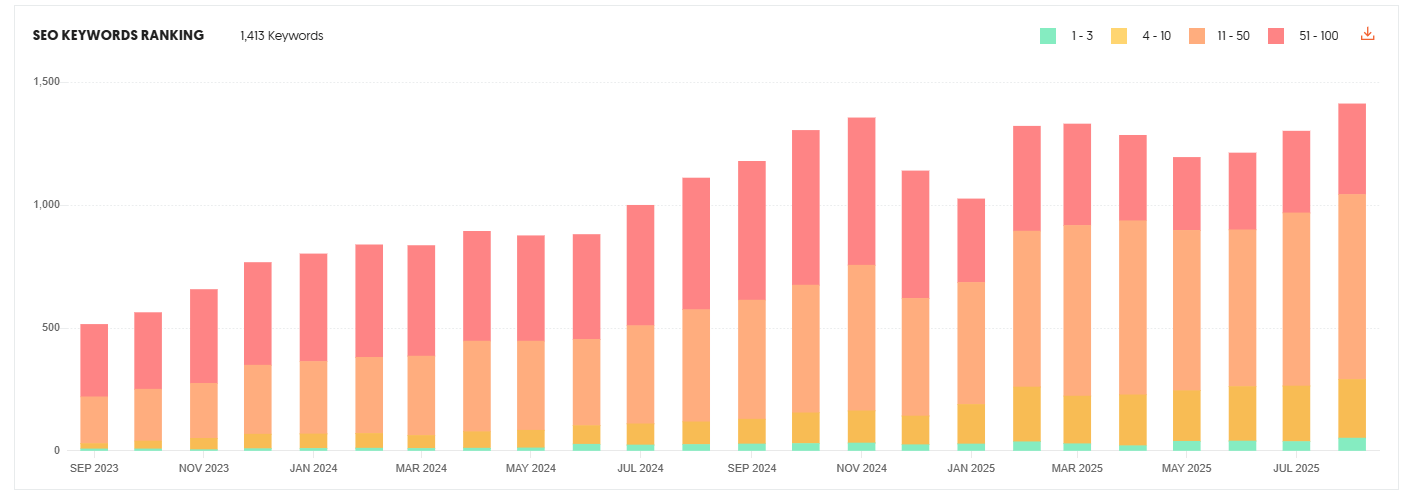
This is where the magic happens: your SEO work compounds over time, meaning months or years later, your website may still be generating enquiries, even without you posting anything new on social media.
This is why, when I sit down to work on my marketing, my priority is always focused on website content and SEO rather than social media. My time available for marketing is precious, and I want my efforts to reap maximum benefits for my business.
How To Get Found In AI Search
Let’s recap! AI search is an alternative to traditional search engines such as Google. Increasingly, people are turning to AI tools for search, and this trend is likely to continue in the years ahead.
While traditional (Google) search is not going anywhere yet, it would be advantageous for you to also be gaining enquiries for your photography business via AI Search. Small business owners who have invested in their SEO are benefiting from AI search enquiries driving traffic to their websites (I certainly am!).
For photographers, there is a huge opportunity here. Those with a strong SEO foundation, or who now begin to prioritise working on their website SEO, will reap the greatest rewards.
If you want to be found by AI (and real clients):
- Audit and optimise your website SEO
- Publish helpful, client-focused blog content regularly
- Build credibility with guest blogs, features, and backlinks
A key marketing priority is for you to be discoverable where people are asking questions online.
Is your website getting suggested in AI Search queries? If not, you have some work to do on your SEO if you don’t want to fall behind! Get in touch if you’d like help to master SEO, strategic blogging and PR – I cover all of this in my signature mentoring programme, The Photographer’s Visibility Blueprint.